



















Russian Federation
Razvitie Goroda Research and Production Center (General Director)
Russian Federation
Russian Federation
Russian Federation
Russian Federation
UDC 69.059
UDC 004.9
Source data of a capital construction facility is generated at the early stages of the life cycle and must be transferred between stages without loss; its completeness, reliability and machine-readability largely determine the efficiency of the facility life cycle management. Information gaps are most acute at the handover of the facility to the longest and most resource-intensive stage of the life cycle — operation, which accounts for about 75 % of total costs. In domestic practice the composition, collection methods and form of source data are not systematized or differentiated by object type and by the availability of an information model, which causes information gaps in the life cycle. The aim is to identify and systematize the features of collection and completeness assessment of source data in the life cycle management of a facility, primarily an apartment building. Using apartment buildings as an example, the composition of source data is systematized into five functional groups detailed by attribute subgroups, carriers, update frequency and responsible parties; a comparative analysis of two collection strategies — primary (inspection, laser scanning, scan-to-BIM) and model-based with COBie exchange — is carried out against seven criteria; a data collection and verification procedure and an attribute completeness coefficient are proposed. It is established that the efficiency of the facility life cycle management is determined not by the volume but by the structuring of source data and the continuity of its transfer between stages; a differentiated collection approach depending on object type and model availability and a quantitative data completeness tool are proposed.
life cycle management, capital construction facility, apartment building, source data, building information modeling, laser scanning, COBie, information requirements, data completeness
Вступление
Управление жизненным циклом объекта капитального строительства опирается на непрерывность данных: сведения о решениях, конструкциях и оборудовании формируются на стадиях проектирования и строительства и должны без потерь передаваться на последующие стадии. Среди стадий жизненного цикла этап эксплуатации остаётся наиболее протяжённым во времени и наиболее затратным: на его долю приходится порядка 75 % совокупных затрат на протяжении всего жизненного цикла [1]. В этот период принимается основной объём решений по техническому обслуживанию, ремонту, обеспечению безопасности и коммерческому использованию объекта, причём качество этих решений определяется не опытом отдельных специалистов, а информационным обеспечением — теми исходными данными, которые передаются объекту по цепочке стадий жизненного цикла и поддерживаются актуальными в течение всего срока эксплуатации.
Наиболее массовым и нормативно нагруженным классом объектов в этом отношении являются многоквартирные дома (МКД): по данным Росстата, на МКД приходится около 75 % вводимого в стране жилья, а жилищный фонд России превышает 2,85 млрд м². Инженерная инфраструктура современного МКД включает более десяти взаимосвязанных подсистем, а множественность собственников при единственном профессиональном операторе — управляющей организации — повышает требования к полноте и достоверности исходных данных [2]. Поэтому далее состав и сбор данных рассматриваются прежде всего на примере МКД, сохраняя применимость к другим типам объектов недвижимости.
Практика показывает, что управление объектом в России по-прежнему опирается преимущественно на бумажный документооборот и разрозненные сведения, утрачивающие актуальность ещё на стадии строительства. Проектная документация постепенно расходится с фактическим состоянием объекта; исполнительные схемы и паспорта оборудования теряются при смене эксплуатирующих организаций. В результате этап эксплуатации стартует в условиях информационного дефицита, что прямо отражается на трудозатратах и аварийности.
Анализ публикаций показывает, что проблема информационного обеспечения эксплуатации исследуется по нескольким направлениям, однако целостной систематизации именно сбора данных не сложилось. B. Becerik-Gerber с соавторами [3] на основе опроса специалистов определили области применения информационного моделирования в эксплуатации и сгруппировали требования к данным, показав, что наиболее востребованы сведения о помещениях, об оборудовании и его расположении, о планово-предупредительном обслуживании. R. Volk, J. Stengel и F. Schultmann [4], обобщив более ста семидесяти работ, установили, что для существующего фонда информационные модели практически отсутствуют, а их ретроспективное создание затруднено тем, что геометрическое обследование фиксирует преимущественно видимые элементы. S. Matarneh с коллегами [5, 6] формализовали информационные требования к системам управления эксплуатацией, выделив укрупнённо восемь разделов и тридцать восемь подразделов данных, и описали процесс их обмена между моделью и эксплуатационными системами. Z. Fang с соавторами [7] обратили внимание на качество данных как самостоятельную задачу управления портфелем активов, а S. Durdyev [8] систематизировал барьеры внедрения информационного моделирования в эксплуатацию, среди которых дефицит и неструктурированность исходных данных занимают одно из первых мест. В отечественной литературе вопросы обследования и поэтапного сбора данных рассматривали К. В. Бородулин [9], А. А. Черникова [10] и А. В. Деменев [11], а вопросы стратегического анализа жизненного цикла — Е. А. Гусакова [1]. Вместе с тем особенности сбора и структурирования исходных данных, дифференцированные по типам объектов и по наличию информационной модели, а также инструменты количественной оценки полноты данных в литературе не представлены.
Целью работы является выявление и систематизация особенностей сбора и оценки полноты исходных данных в управлении жизненным циклом объекта капитального строительства, прежде всего многоквартирного дома. Для её достижения решаются задачи: систематизировать состав исходных данных с детализацией по атрибутам, носителям и ответственным; сопоставить две стратегии сбора данных по совокупности критериев; предложить процедуру сбора и верификации данных и количественный показатель их полноты; сформулировать требования к структурированию данных.
Методы
Исходные данные как ресурс этапа эксплуатации и природа информационных разрывов
Под исходными данными этапа эксплуатации понимается совокупность сведений об объёмно-планировочных и конструктивных решениях, инженерных системах и оборудовании, потреблении ресурсов, организационных процессах и пользователях объекта, необходимых и достаточных для решения эксплуатационных задач. Принципиальное отличие от стадии проектирования состоит в том, что эксплуатационные данные описывают не намерение, а фактическое состояние объекта, и потому должны непрерывно актуализироваться по результатам обслуживания.
Разрыв между данными, формируемыми при строительстве, и потребностями эксплуатации носит системный характер и складывается из трёх составляющих. Технологическая составляющая обусловлена несовместимостью форматов: выгрузки проектных и строительных систем не импортируются напрямую в системы документооборота эксплуатирующей организации, а при конвертации теряют атрибутивную часть. Семантическая составляющая порождается различием понятийных систем застройщика и управляющей компании: один и тот же элемент классифицируется и описывается разными наборами атрибутов, вследствие чего данные формально присутствуют, но не сопоставимы. Организационная составляющая выражается в отсутствии регламента передачи ответственности за данные, из-за чего значительная часть сведений на момент приёмки оказывается недоступной для практического применения. Преодоление этих разрывов начинается с упорядочения состава собираемых данных и формализации требований к ним.
Систематизация состава исходных данных объекта
Состав исходных данных целесообразно структурировать по функциональным группам, каждая из которых обслуживает определённый класс эксплуатационных задач и характеризуется собственными носителями, периодичностью актуализации и ответственным за ведение. Объёмно-планировочные и конструктивные данные задают пространственный каркас объекта и служат основой привязки всех прочих сведений; они формируются однократно и уточняются при реконструкции. Данные об инженерных системах и оборудовании наиболее объёмны и динамичны: они включают паспортные характеристики, расположение, схемы подключения и параметры обслуживания и обновляются при каждом ремонте или замене. Данные о потреблении ресурсов имеют выраженную временную природу и формируются приборами учёта в непрерывном режиме. Данные о процессах управления фиксируют регламенты, графики и поток заявок, а данные о пользователях и арендаторах — договорные отношения и показатели использования помещений. Детализированный состав групп приведён в Таблице 1.
Таблица 1.
Систематизация состава исходных данных МКД для этапа эксплуатации с привязкой к атрибутивным подгруппам
|
Группа данных |
Что входит |
Ключевые |
Носитель/ |
Актуа- |
Ответ- |
|---|---|---|---|---|---|
|
Объёмно-планировочные и конструктивные |
геометрия; конструктивные характеристики; местоположение |
площади и назначение |
проектная и |
однократно, при реконструкции |
технический отдел |
|
Инженерные системы и оборудование |
идентификация; маркировка; эксплуатационные параметры; пожарные свойства |
наименование, |
паспорта |
при ремонте и замене |
группа эксплуатации |
|
Потребление ресурсов |
показания приборов учёта (вне состава информационной модели) |
расход |
приборы учёта, |
непрерывно |
диспетчерская служба |
|
Процессы управления |
эксплуатационные параметры (обслуживание и ремонт) |
регламенты, |
организационная |
по событиям |
технический директор |
|
Пользователи и арендаторы |
идентификация помещений и квартир; договорные данные |
состав, договоры аренды, |
договоры, |
по договорам |
коммерческая служба |
Существенно, что состав и приоритет данных зависят от типа объекта: для МКД первостепенны данные об инженерных системах, конструкциях и пожарной безопасности, для офисного здания — об арендных отношениях, для торгово-развлекательного центра — о посещаемости и системах безопасности [12]. Поэтому единый перечень собираемых сведений неэффективен, и типологическая дифференциация позволяет избежать одновременно и избыточности, и пробелов. Для МКД атрибутивный состав инженерно-конструктивных групп закономерно детализируется по подгруппам — геометрия, идентификация, маркировка, местоположение, пожарные свойства и эксплуатационные параметры, — что соответствует структуре машиночитаемых спецификаций требований к информации (IDS), формируемых при передаче модели в эксплуатацию.
Сравнительный анализ стратегий сбора данных
На практике складываются две принципиально различные стратегии получения исходных данных, выбор между которыми определяется наличием пригодной информационной модели объекта.
Первая стратегия (первичный сбор) — применяется к существующему фонду, для которого модель отсутствует. Её основу составляет обследование, разделяемое на визуальное, инструментальное и инструментально-техническое, а также лазерное сканирование с построением модели по технологии scan-to-BIM. Тахеометры и трёхмерные сканеры обеспечивают высокую детализацию и точность обмеров и снижают влияние человеческого фактора; получаемое облако точек служит геометрической основой, которую насыщают атрибутивной информацией о материалах, дефектах и местах вскрытий. Принципиальное ограничение, отмеченное в обзорных работах [13, 4], состоит в том, что геометрическое обследование фиксирует только видимую часть объекта, поэтому скрытые сети требуют дополнительного обследования и сопоставления с архивной документацией.
Вторая стратегия (извлечение данных из переданной информационной модели) — применяется, когда объект вводится в эксплуатацию вместе с насыщенной моделью. Здесь задача смещается от первичного сбора к корректному отбору и передаче эксплуатационно значимых сведений из модели в системы управления. Полностью насыщенная модель выступает централизованным и достоверным источником данных об активах, что особенно ценно для предотвращения их потери при смене эксплуатирующих организаций. Сопоставление двух стратегий по совокупности критериев приведено в Таблице 2.
Таблица 2.
Сравнение стратегий сбора исходных данных
|
Критерий |
Первичный сбор (объект без модели) |
Извлечение из информационной модели |
|---|---|---|
|
Полнота охвата |
ограничена доступностью элементов и сохранностью архива |
определяется качеством и полнотой переданной модели |
|
Точность геометрии |
высокая при лазерном сканировании (видимые элементы) |
соответствует заданному уровню проработки модели |
|
Трудоёмкость |
высокая, преобладают полевые работы |
низкая, преобладает камеральная обработка |
|
Срок получения |
значительный (обследование, обработка) |
минимальный (выгрузка из модели) |
|
Машиночитаемость |
требует ручного структурирования |
обеспечивается форматами IFC и COBie |
|
Актуализация |
по результатам периодических обследований |
по данным модели и систем мониторинга |
|
Основной риск |
пропуск скрытых элементов и сетей |
неполнота или недостоверность атрибутов модели |
Сравнение показывает, что вторая стратегия предпочтительна по трудоёмкости, срокам и машиночитаемости, однако её результат целиком зависит от качества переданной модели. Поэтому ключевым элементом обеих стратегий становится не сам сбор, а последующая верификация и структурирование данных.
Передача данных через формат COBie и его ограничения
Официально признанным средством обмена эксплуатационными данными между информационной моделью и системами управления является формат COBie (Construction-Operations Building information exchange). COBie представляет собой подмножество данных модели, ориентированное на передачу не геометрии, а атрибутивных сведений — о помещениях и зонах, оборудовании и его расположении, инструкциях, гарантиях и планах обслуживания, — и может быть представлен как в виде связанных таблиц, так и в структуре открытого стандарта IFC (Industry Foundation Classes), что обеспечивает независимость обмена от конкретного программного обеспечения [14, 15]. Согласно национальному приложению к стандартам серии ISO 19650, негеометрический обмен данными в открытых форматах рекомендуется структурировать в соответствии с COBie [16].
Вместе с тем обмен через COBie имеет существенные ограничения, отмеченные в литературе. Во-первых, он носит преимущественно однонаправленный характер: после выгрузки в эксплуатационную систему связь с моделью разрывается, и модель быстро устаревает. Во-вторых, табличное представление лишает данные визуальных преимуществ модели и требует от персонала навыков на стыке эксплуатации и моделирования. В-третьих, сам факт передачи модели со стадии строительства не гарантирует её пригодности для эксплуатации: без проверки полноты атрибутов часть переданных сведений оказывается неприменимой. Поэтому исследователи рассматривают переход от однонаправленного обмена к двусторонней связи модели и систем эксплуатации, в том числе через интеграцию с системами автоматизации здания и концепцию цифрового двойника, как перспективное направление снижения информационных потерь [17, 18, 19].
Результаты
Процедура сбора и верификации данных и оценка их полноты
Обобщение двух стратегий позволяет предложить единую процедуру сбора и верификации исходных данных, инвариантную к способу их получения. Процедура включает: формирование перечня требуемых атрибутов по группам данных и типу объекта; разделение сведений на достоверные, закреплённые документально или содержащиеся в модели, и подлежащие проверке; восполнение недостающих данных обследованием или дозаполнением модели; проверку полноты и непротиворечивости; привязку данных к классификатору и пространственной структуре объекта; передачу структурированного набора в систему управления эксплуатацией [20]. Обобщённая схема, объединяющая обе стратегии, представлена на Рис. 1.
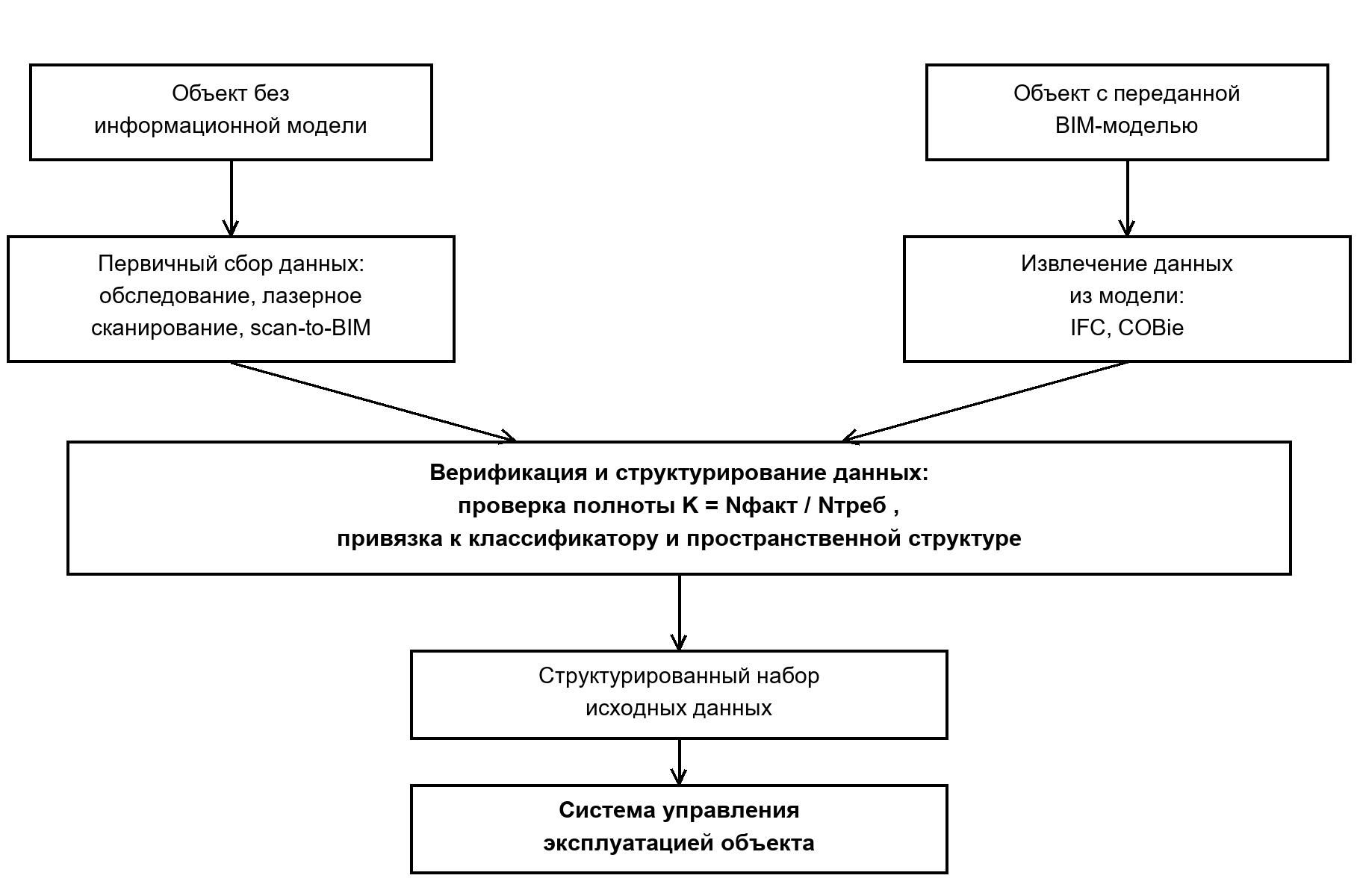
Рис. 1. Схема сбора и структурирования исходных данных объекта для этапа эксплуатации
Для количественного контроля результата сбора предлагается оценивать полноту атрибутивного описания коэффициентом полноты, вычисляемым для каждой инженерной подсистемы как отношение фактически заполненных атрибутов к требуемым:
где K — коэффициент полноты атрибутивного описания подсистемы (0 ≤ K ≤ 1); Nфакт — число фактически заполненных атрибутов; Nтреб — число требуемых атрибутов, заданное спецификацией требований к информации (IDS) для соответствующей подсистемы. Сводный показатель по объекту определяется как средневзвешенное значение коэффициентов подсистем с учётом их значимости. Показатель позволяет объективно фиксировать готовность данных к передаче в эксплуатацию, выявлять подсистемы с наибольшим дефицитом сведений и планировать их первоочередное дозаполнение, а также служит формальным критерием приёмки информационной модели МКД от застройщика.
Указанный сводный показатель вычисляется по формуле:
$$K_{об}=\frac{Σ (w_i · K_i)}{Σ w_i} ,$$
где Kоб — сводный коэффициент полноты по объекту; Ki — коэффициент полноты i-й инженерной подсистемы; wi — весовой коэффициент значимости i-й подсистемы, принимаемый пропорционально доле подсистемы в восстановительной стоимости объекта либо её критичности для безопасной эксплуатации по принятой в организации шкале. Весовые коэффициенты нормируются так, что их сумма равна единице; при равной значимости подсистем сводный показатель сводится к среднему арифметическому коэффициентов полноты.
Настоящее исследование носит теоретико-аналитический характер: классификация групп данных, процедура верификации и коэффициенты полноты получены методами системного анализа нормативных требований и обобщения отраслевой практики, а состав групп и атрибутивных подгрупп соотнесён с открытыми спецификациями требований к информации (IDS). Экспериментальная проверка коэффициента полноты на выборке конкретных многоквартирных домов и привлечение экспертных оценок для верификации состава групп данных и значимости инженерных подсистем составляют направление дальнейших исследований.
Требования к структурированию данных
Сопоставление стратегий и процедуры показывает, что определяющим фактором эффективности этапа эксплуатации является не объём собранных сведений, а их структурированность и пригодность к машинной обработке: несистематизированный массив, даже значительный по объёму, не обеспечивает решения задач, тогда как умеренный, но строго структурированный набор атрибутов позволяет автоматизировать планирование обслуживания и контроль состояния объекта. Из этого вытекают требования к структурированию данных: привязка к классификационной системе и пространственной структуре объекта для однозначной идентификации; разграничение по уровням доступа для различных категорий пользователей; дифференциация состава атрибутов по эксплуатационным задачам с выделением обязательных и желательных сведений для каждой подсистемы; хранение в открытых форматах, обеспечивающих независимость от программного обеспечения и долговременную сохранность. Соблюдение этих требований превращает разрозненные сведения в управляемый информационный актив объекта.
Экономический эффект и роль человеческого фактора
Ожидаемый экономический эффект от применения предложенного подхода формируется за счёт сокращения трудозатрат на сбор, верификацию и поддержание исходных данных в актуальном состоянии и может быть оценён по формуле:
ΔЭ = (Tр − Tм) · Cч · N,
где Tр и Tм — трудозатраты на реализацию информационных процессов соответственно при ручном ведении данных и при применении предложенной процедуры, чел.-ч; Cч — стоимость одного человеко-часа инженерно-технического персонала, руб.; N — число реализаций процесса в течение года. Конкретная величина эффекта зависит от класса, площади и оснащённости объекта и подлежит количественному уточнению при внедрении методики на конкретных многоквартирных домах.
Существенное влияние на качество исходных данных оказывает человеческий фактор: значительная часть атрибутов заполняется специалистами вручную, что порождает пропуски, опечатки и несогласованные значения. Снижение этого риска достигается автоматизированной проверкой данных на соответствие спецификации требований (IDS) с формированием протокола несоответствий, применением при вводе выпадающих списков и форматных ограничений, а также чётким разграничением ответственности за ведение атрибутов между ролями. Коэффициент полноты при этом делает влияние человеческого фактора измеримым и управляемым показателем.
Выводы
В результате выполненного исследования систематизированы особенности сбора и оценки полноты исходных данных в управлении жизненным циклом объекта капитального строительства. Установлено следующее.
Состав исходных данных систематизирован по пяти функциональным группам с детализацией по атрибутам, носителям, периодичности актуализации и ответственным, что с учётом типологической специфики объектов позволяет формировать необходимый и достаточный перечень собираемых сведений.
Впервые выполнен сравнительный анализ двух стратегий сбора данных — первичного и на основе переданной информационной модели — по семи критериям; показано, что модельная стратегия превосходит первичную по трудоёмкости, срокам и машиночитаемости, но критически зависит от качества модели, вследствие чего ключевым элементом становится верификация данных.
Предложены единая процедура сбора и верификации данных и коэффициент полноты атрибутивного описания, дающий количественный критерий готовности данных к передаче в эксплуатацию и приёмки информационной модели.
Установлено, что эффективность управления жизненным циклом объекта обеспечивается структурированностью исходных данных и непрерывностью их передачи между стадиями, а не объёмом данных; на этом основании сформулирован дифференцированный подход к сбору исходных данных, учитывающий тип объекта и наличие информационной модели. Результаты применимы для управляющих организаций, переходящих к информационному управлению фондом, и для застройщиков, формирующих требования к составу передаваемых данных на стадиях жизненного цикла.
1. Gusakova E.A. Directions for predictive analysis of the life cycle of real estate development projects// Vestnik MGSU. 2019, Vol. 14 (9). P.805-13. DOI: https://doi.org/10.22227/1997-0935.2019.9.1196-1204
2. Kievskiy I. L., Hertz V. A. Organizational and Technological Modeling of the Operation of Apartment Buildings Through Information Models. Promyshlennoe i grazhdanskoe stroitel'stvo [Industrial and Civil Engineering], 2024, no. 11, pp. 4-9. (In Russ.). doi:https://doi.org/10.33622/0869-7019.2024.11.04-09
3. Becerik-Gerber B., Jazizadeh F., Li N., Calis G. Application Areas and Data Requirements for BIM-Enabled Facilities Management // Journal of Construction Engineering and Management. 2012. Vol. 138, No. 3. P. 431–442. DOI:https://doi.org/10.1061/(ASCE)CO.1943-7862.0000433. URL: https://ascelibrary.org/doi/abs/10.1061/(ASCE)CO.1943-7862.0000433
4. Volk R., Stengel J., Schultmann F. Building Information Modeling (BIM) for Existing Buildings — Literature Review and Future Needs // Automation in Construction. 2014. Vol. 38. P. 109–127. URL: https://www.sciencedirect.com/science/article/abs/pii/S092658051300191X. DOI: https://doi.org/10.1016/j.autcon.2013.10.023
5. Matarneh S., Danso-Amoako M., Al-Bizri S., Gaterell M., Matarneh R. BIM-Based Facilities Information: Streamlining the Information Exchange Process // Journal of Engineering, Design and Technology. 2019. Vol. 17, No. 6. P. 1304–1322. URL: https://pure.port.ac.uk/ws/portalfiles/portal/15115071/BIM_based_facilities_information.pdf DOI: https://doi.org/10.1108/JEDT-02-2019-0048
6. Matarneh S. T., Danso-Amoako M., Al-Bizri S., Gaterell M., Matarneh R. T. BIM for FM: Developing Information Requirements to Support Facilities Management Systems // Facilities. 2020. Vol. 38, No. 5/6. P. 378–394.
7. Fang Z., Liu Y., Lu Q., Pitt M., Hanna S., Tian Z. BIM-Integrated Portfolio-Based Strategic Asset Data Quality Management // Automation in Construction. 2022. Vol. 134. Art. 104070. URL: https://www.sciencedirect.com/science/article/pii/S0926580521005215. DOI: https://doi.org/10.1016/j.autcon.2021.104070
8. Durdyev S., Ashour M., Connelly S., Mahdiyar A. Barriers to the Implementation of Building Information Modelling (BIM) for Facility Management // Journal of Building Engineering. 2022. Vol. 46. Art. 103736. URL: https://www.sciencedirect.com/science/article/abs/pii/S2352710221015941. DOI: https://doi.org/10.1016/j.jobe.2021.103736
9. Borodulin K.V. The introduction of building information modeling in maintenance of buildings and structures // Young Scientist LLC. 2019. № 2 (240). P. 200–202. URL: https://moluch.ru/archive/240/55593
10. Chernikova A.A. Building information modeling at the building operation stage // Young Scientist LLC. 2022. № 49 (444). P. 66–68. URL: https://moluch.ru/archive/444/97392
11. Demenev A.V., Artamonov A.S. Information modeling on operation of buildings and structures // On-line Journal Naukovedenie. 2015. Vol. 7, № 3. URL: http://naukovedenie.ru/PDF/29TVN315.pdf
12. Karavaeva N. M., Goncharova N. V., Daineko L. V., Yurasova I. I. Redevelopment and reconception of surplus retail property. Perm University Herald. Economy, 2022, vol. 17, no. 4, pp. 453–473. DOI:https://doi.org/10.17072/1994-9960-2022-4-453-473
13. Chernyavsky A. V. Development of building information modeling technology for facility management // Young Scientist LLC. 2024. № 45 (544). P. 44–50. URL: https://moluch.ru/archive/544/118823
14. Kupriyanovsky V. P., Sinyagov S. A., Namiot D. E., Kupriyanovskaya Yu. V. Economic benefits of using combined BIM-GIS models in the construction industry // International Journal of Open Information Technologies. 2016. Vol. 5, № 4. URL: http://injoit.org
15. Marmo R., Polverino F., Nicolella M., Tibaut A. Building Performance and Maintenance Information Model Based on IFC Schema // Automation in Construction. 2020. Vol. 118. Art. 103275. URL: https://www.sciencedirect.com/science/article/abs/pii/S0926580520302181. DOI: https://doi.org/10.1016/j.autcon.2020.103275
16. Hertz V. A., Knyazeva N.V. Regulatory documentation for the operation of buildings with BIM // CONSTRUCTION AND ARCHITECTURE Volume 11 № 3, 2023. P.9 DOI: https://doi.org/10.29039/2308-0191-2023-11-3-9-9
17. Kazado D., Kavgic M., Eskicioglu R. Integrating Building Information Modeling (BIM) and Sensor Technology for Facility Management // Journal of Information Technology in Construction. 2019. Vol. 24. P. 440–458. URL: https://itcon.org/papers/2019_23-ITcon-Kazado.pdf
18. Mannino A., Dejaco M. C., Re Cecconi F. Building Information Modelling and Internet of Things Integration for Facility Management // Applied Sciences. 2021. Vol. 11, No. 7. Art. 3062. URL: https://www.mdpi.com/2076-3417/11/7/3062
19. Moretti N., Ellul C., Re Cecconi F., Papapesios N., Dejaco M. C. GeoBIM for Built Environment Condition Assessment Supporting Asset Management Decision Making // Automation in Construction. 2021. Vol. 130. Art. 103859. URL: https://www.sciencedirect.com/science/article/abs/pii/S0926580521003101. DOI: https://doi.org/10.1016/j.autcon.2021.103859
20. Akcamete A., Akinci B., Garrett J. H. Potential Utilization of Building Information Models for Planning Maintenance Activities // Proceedings of the EG-ICE 2010. Nottingham, UK, 2010.